
AEO for B2B SaaS: The Complete Playbook to Get Cited by ChatGPT and Perplexity

B2B SaaS companies that optimize content for AI answer engines see 3–6x more AI-referred trial signups, double‑digit conversion rates from AI traffic versus low single digits from Google organic, and measurable pipeline growth within 90 days.
The playbook requires structuring content for extraction, building entity authority across platforms, and running platform-specific optimization for ChatGPT, Perplexity, and Google AI Overviews—because only a small fraction of domains are cited consistently across all three.
Why This Matters Now (Strategic Context)
AI search is not a future trend—it is actively reshaping how B2B buyers discover, evaluate, and shortlist SaaS solutions today.
ChatGPT now processes billions of prompts per day and drives the majority of AI referral traffic to websites. Perplexity handles hundreds of millions of monthly queries against an index of hundreds of billions of URLs. Google AI Overviews already appear in a meaningful share of all search queries, reaching billions of monthly users. At the same time, a growing majority of B2B buyers report using AI tools in their research process.
The economic shift is dramatic. AI‑referred visitors convert at several times the rate of Google organic traffic. Benchmarks show ChatGPT referrals often converting above 15% and Perplexity above 10%, versus around 2% for traditional organic search. In one example, AI traffic represented just a tiny fraction of total visitors for a major SEO tool, but still drove more than 10% additional signups compared to all organic search.
Yet the window is closing. Only a minority of brands remain visible in back‑to‑back AI responses for the same query, and AI Overview content changes frequently even for identical queries. Early movers who establish citation authority now will compound their advantage—the more a brand is cited, the more authoritative it becomes, making future citations even more likely.

Key Data and Market Reality
- AI referral traffic has grown several hundred percent year over year across major platforms.
- AI‑referred visitors went from converting worse than non‑AI traffic to converting significantly better within a single year.
- Content that combines citations, statistics, and quotations consistently achieves 30–40% higher visibility in AI responses.
- Sites implementing structured data and FAQ blocks see double‑digit percentage increases in AI search citations.
- Websites with robust author schema and clear E‑E‑A‑T signals are several times more likely to appear in AI answers.
- Pages updated within 60 days are almost twice as likely to appear in AI responses as stale content.
- A large majority of URLs cited by ChatGPT, Perplexity, and AI Overviews do not rank in Google’s top 100 for the original query.
| Metric | Value |
|---|---|
| ChatGPT conversion rate | ~16% |
| Perplexity conversion rate | ~10–11% |
| Google organic conversion rate | ~2% |
| AI referral traffic YoY growth | ~3.5x |
| ChatGPT share of AI referrals | Roughly three‑quarters of all AI referrals |
| Best‑in‑class AI citation accuracy | Around 60%+ for the leading platform |
| Overall citation failure rate | 60%+ incorrect or missing source attributions |
Trade-offs and Limitations
| Approach | When It Works | When It Fails | Real Cost / Risk |
|---|---|---|---|
| SEO-only (no AEO) | Established brands with strong top‑10 rankings and high domain authority | ChatGPT and Perplexity ignore you; zero‑click searches erode traffic quietly | Search volume and organic CTR are declining; brand is invisible inside AI answers |
| AEO without SEO foundation | Almost never; AEO builds on basic search visibility | Always fails in isolation—AI Overviews heavily favor existing top‑10 domains | Content investment with no discoverability; hard to earn initial citations |
| Platform-specific optimization (Recommended) | When you run tailored playbooks for ChatGPT, Perplexity, and Google AI simultaneously | If you over‑index on a single platform and ignore others | Requires consistent content production, technical work, and monitoring |
| Content volume without structure | Never—AI engines need extractable answer blocks, not walls of text | Producing thin, keyword‑stuffed content at scale | Keyword stuffing and unstructured content actively reduce AI visibility |
The hard truth: publishing content is not the same as being citable. Most blog posts that get cited by ChatGPT and other models include a clearly identifiable “answer capsule” at the top of each section—content without this structure is functionally invisible to AI engines.
The Three-Platform Reality: Platform-Specific Playbooks
Treating “AI search” as one thing is like treating LinkedIn and TikTok as the same channel. Each major answer engine has its own retrieval logic, content preferences, and citation behavior.
ChatGPT: What It Wants
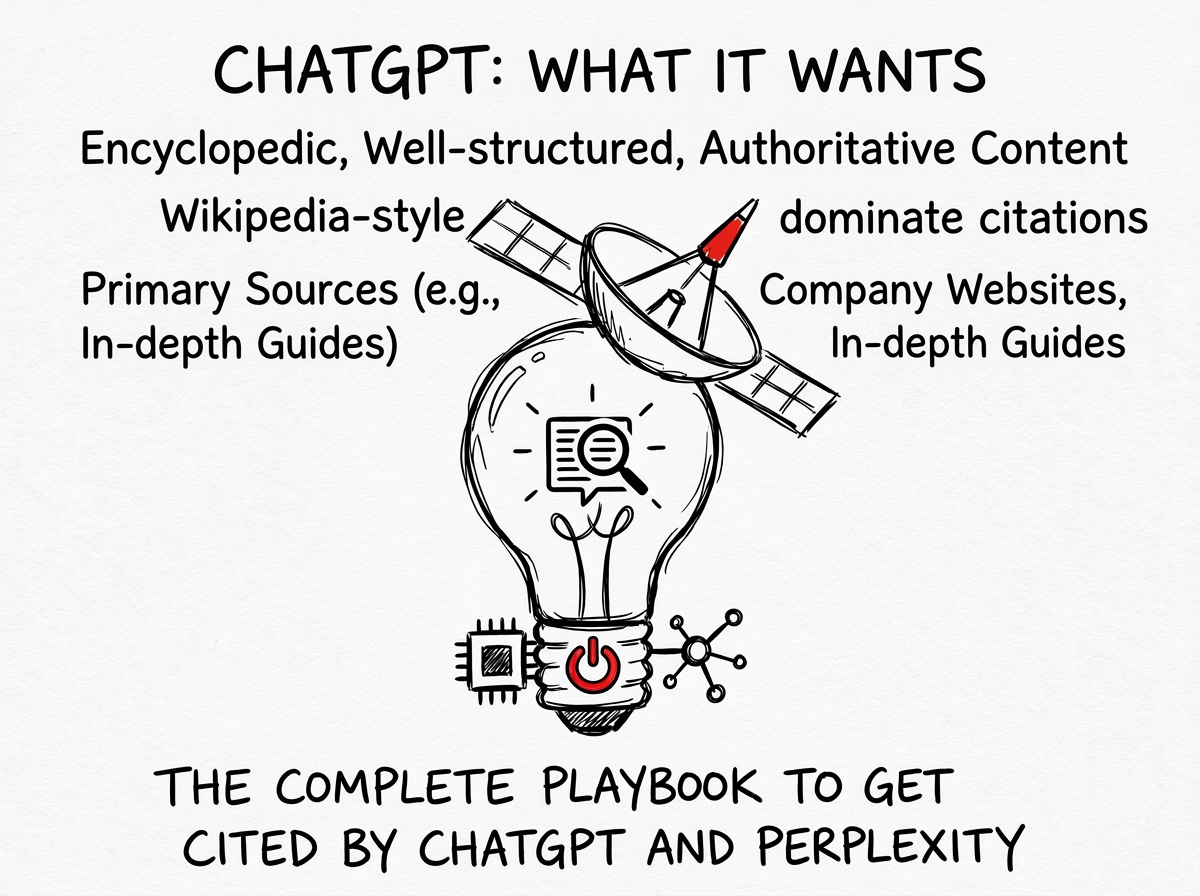
ChatGPT favors encyclopedic, well‑structured, authoritative content. Wikipedia‑style pages dominate its citation graph, and it prefers getting information directly from primary sources such as company websites and in‑depth guides.
Structural signals that perform well:
- 120–180 word sections between clear hierarchical headings.
- Straightforward, descriptive headings outperform question‑style headings.
- Broad, topic‑describing URLs often outperform exact‑match keyword slugs.
- Brand mentions and topical authority matter as much as raw backlink counts.
- Most of its heavily cited pages are less than two years old.
B2B SaaS actions:
- Create definitive “Best [Category] for [Use Case]” guides and category explainers.
- Maintain comprehensive, up‑to‑date product documentation and implementation guides.
- Include statistics with attribution and short methodology notes.
- Update content regularly with visible “last updated” timestamps.
Perplexity: What It Wants
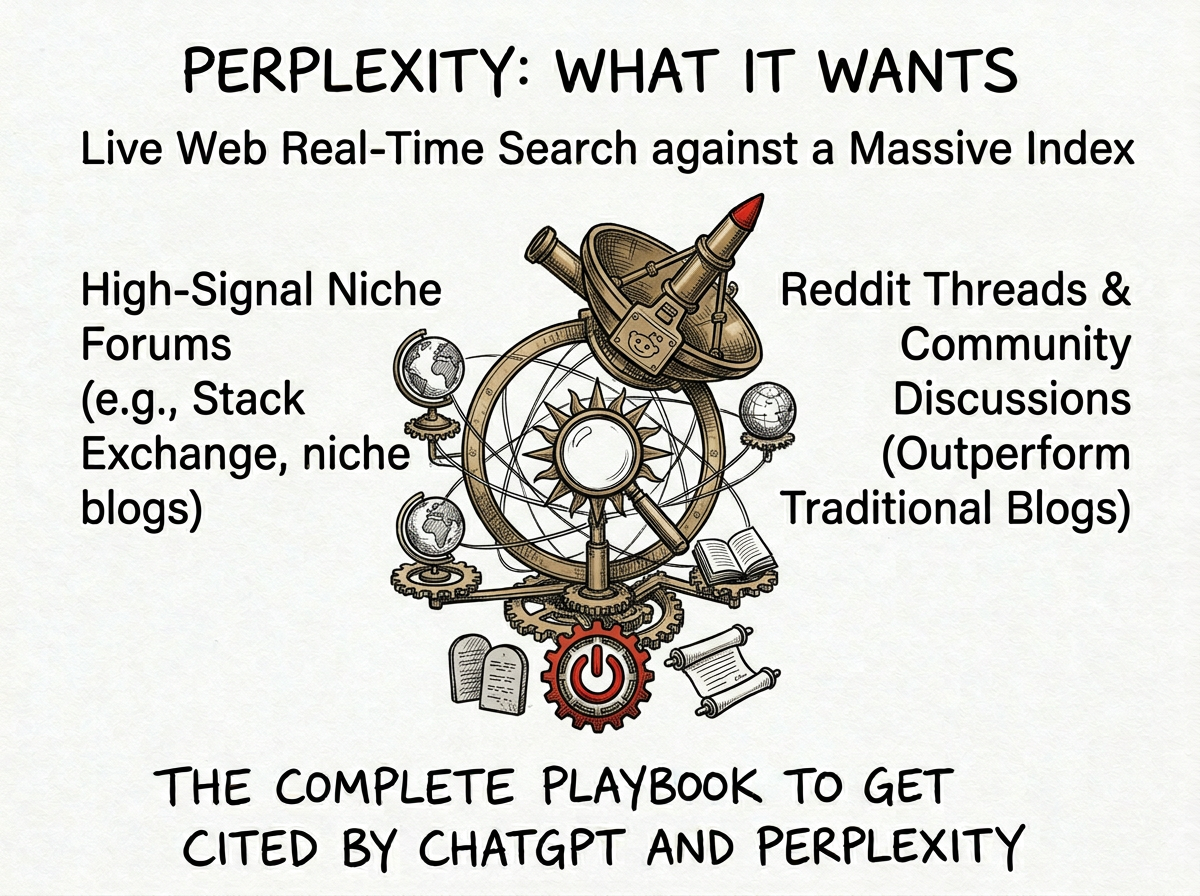
Perplexity searches the live web in real time against a massive index and is unusually fond of community and discussion content. Reddit threads and high‑signal niche forums feature heavily in its citation patterns, often outperforming traditional blogs.
Structural signals that perform well:
- 40–60 word lead paragraphs that give a direct, skimmable answer.
- Comparison tables with clear, extractable column headers.
- Fresh statistics and visible “updated for [year]” signals.
- Multiple inline citations per answer, pulling from a diversity of domains.
- Strong recency and update frequency.
B2B SaaS actions:
- Create detailed “X vs Y: complete [Year] Comparison” pages with pricing and features.
- Maintain authentic, value‑adding presence in relevant subreddits and communities.
- Update high‑value content monthly with new data points and examples.
- Include methodology notes and sample sizes for all data claims.
Google AI Overviews / AI Mode: What It Wants
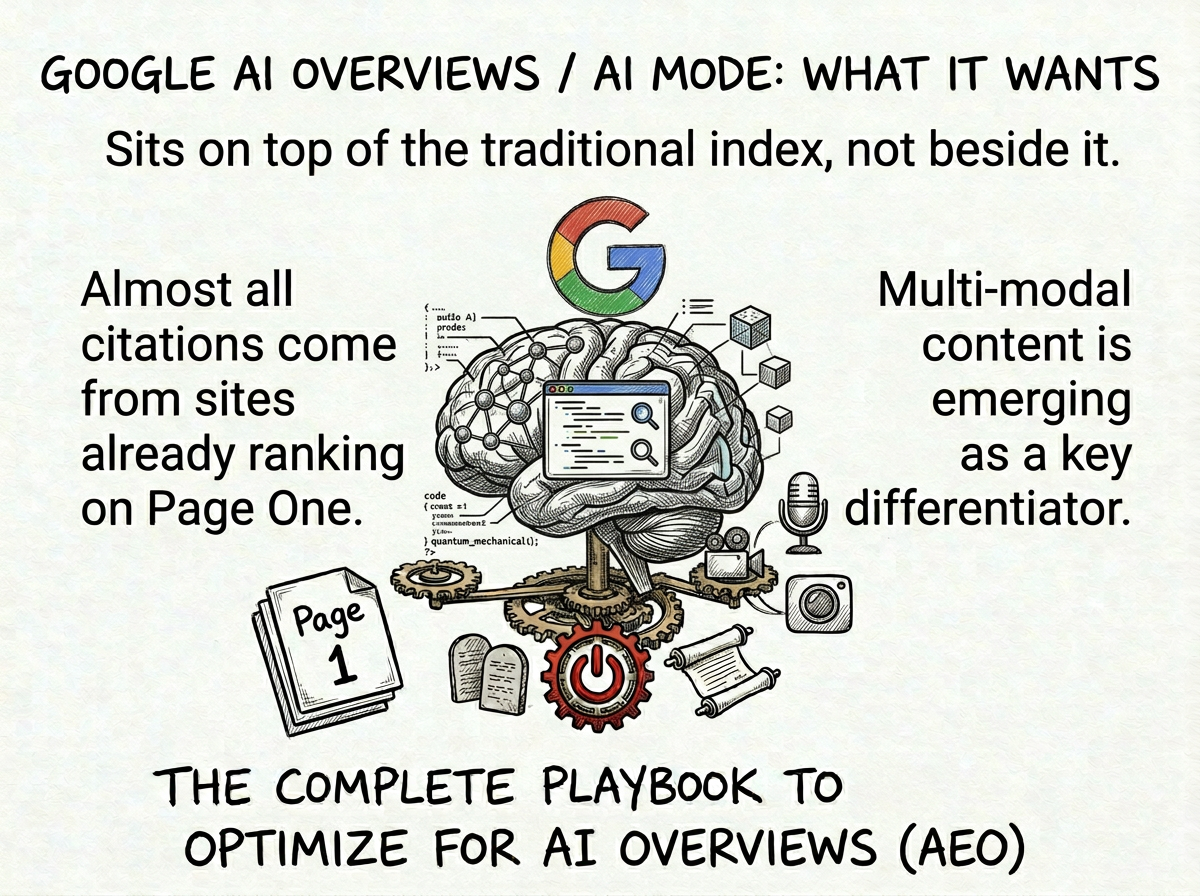
Google AI Overviews sit on top of the traditional index, not beside it. Almost all citations in AI Overviews come from sites already ranking on page one, and multi‑modal content is emerging as a key differentiator.
Structural signals that perform well:
- Pages with a high number of recognized entities (brands, products, people, categories).
- Strong semantic completeness—the page can stand alone as a full answer.
- Clear E‑E‑A‑T signals: real authors, credentials, sources, and brand reputation.
- Multi‑modal pages combining text, images, video, and structured data.
B2B SaaS actions:
- Maintain a strong traditional SEO foundation for core terms.
- Implement comprehensive schema markup (FAQ, HowTo, Article, Organization).
- Build multi‑modal assets (videos, demos, annotated screenshots) around key topics.
- Ensure cross‑platform entity consistency (Wikipedia, Wikidata, LinkedIn, G2, Crunchbase).
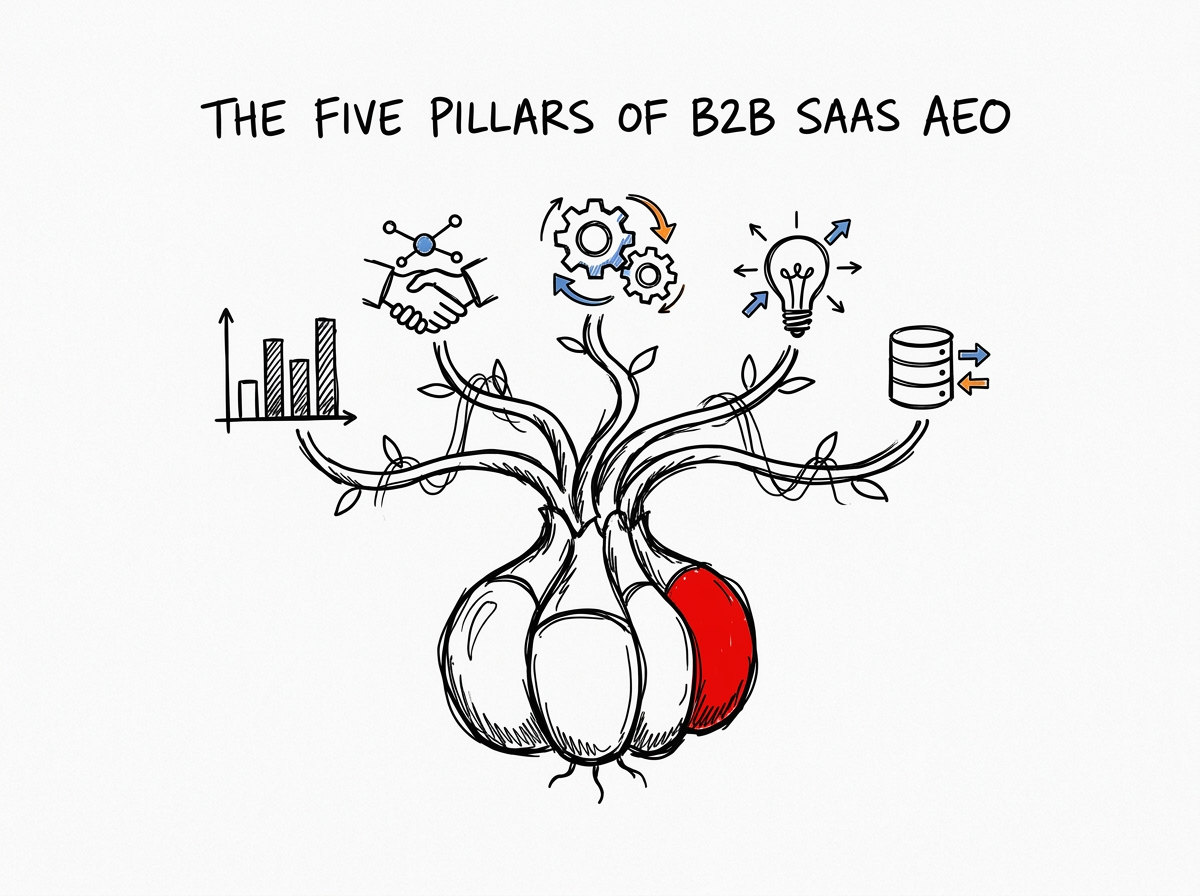
The Five Pillars of B2B SaaS AEO
Pillar 1: Answer-First Content Architecture
AI systems extract content that directly answers questions. The inverted pyramid—answer first, then context—becomes mandatory.
- Lead every section with a 40–60 word direct answer before elaborating.
- Use a clean H1 → H2 → H3 hierarchy; avoid skipping levels.
- Target 1,500+ total words with roughly 100–150 words per section.
- Replace promotional copy with precise, verifiable statements.
- Use bullets, numbered lists, and tables to make extraction easy.
- Insert an “answer capsule” at the top of each major section—a self‑contained paragraph AI can quote verbatim.
Pillar 2: Schema Markup and Structured Data
Schema markup translates your content into a machine‑readable format. Sites that implement structured data and FAQ blocks consistently see significant increases in AI citations, and schema adoption is rising quickly.
Priority schema types for B2B SaaS:
- FAQPage: for question‑answer style pages and product FAQs.
- HowTo: for implementation guides, setup flows, and tutorials.
- Article / NewsArticle: for blog content with author, publish date, and last modified date.
- Organization: for homepage and About pages to reinforce brand entity data.
- Product: for feature pages, pricing, and comparison landing pages.
Always validate implementations using Google’s Rich Results Test and a schema validator. Use JSON‑LD format and keep markup synced with on‑page content and visible timestamps.
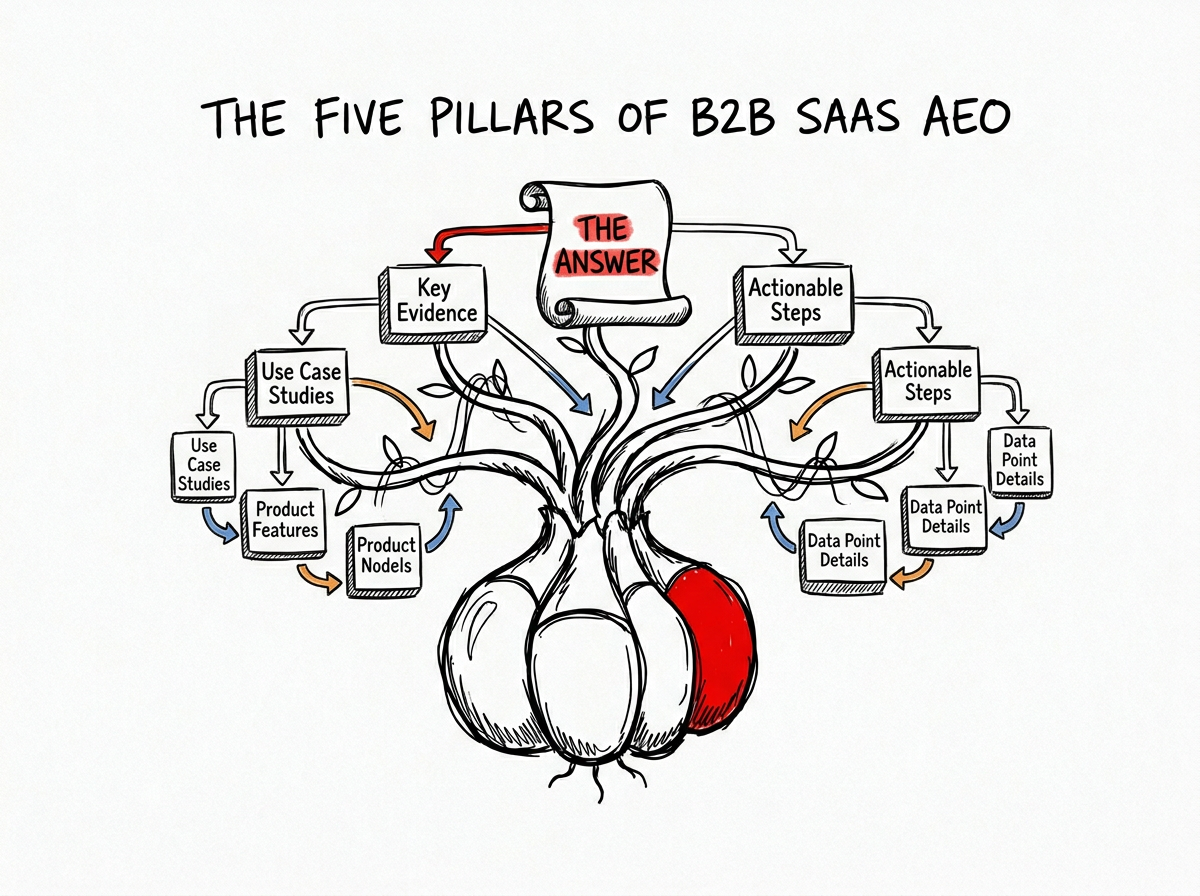
Pillar 3: Entity Optimization and Knowledge Graph Presence
Entity optimization ensures AI models recognize your company as a distinct, well‑defined concept in their internal knowledge graphs.
Core entity building blocks:
- Entity definition: consistent name, short description, category, and core attributes everywhere.
- Entity consistency: identical brand details across your site, LinkedIn, Crunchbase, G2, ProductHunt, and other hubs.
- Entity authority: third‑party mentions, reviews, awards, and partnerships that validate your position.
- Entity connectivity: clear relationships with other entities (integrations, ecosystems, industry associations).
- sameAs links: mark up your site with links pointing to your canonical external profiles.
A simple diagnostic: ask each major AI, “What is [Your Company]?” and “Which companies offer [your category]?” If your brand is missing, misclassified, or described vaguely, you have entity work to do.
Pillar 4: Off-Site Authority and Distribution
AI systems heavily weight off‑site authority to decide what to trust and cite. In controlled experiments, techniques that encouraged quoting and citing sources meaningfully increased visibility even for sites that were not ranking first.
High‑impact tactics:
- Reddit presence: Contribute detailed, non‑promotional expertise in relevant subreddits. Brands that show up in high‑quality threads earn more Perplexity and Google AI citations.
- Review platforms: Build deep, accurate profiles on G2, Capterra, and TrustRadius, with clear positioning and customer quotes.
- AI‑favored channels: Repurpose your best content on Medium, Substack, ProductHunt, GitHub, and similar platforms that language models crawl frequently.
- Industry publications: Secure guest posts, expert roundups, and data‑driven thought leadership.
- Wikipedia / Wikidata: Where notability allows, maintain a clean, well‑sourced entity page.
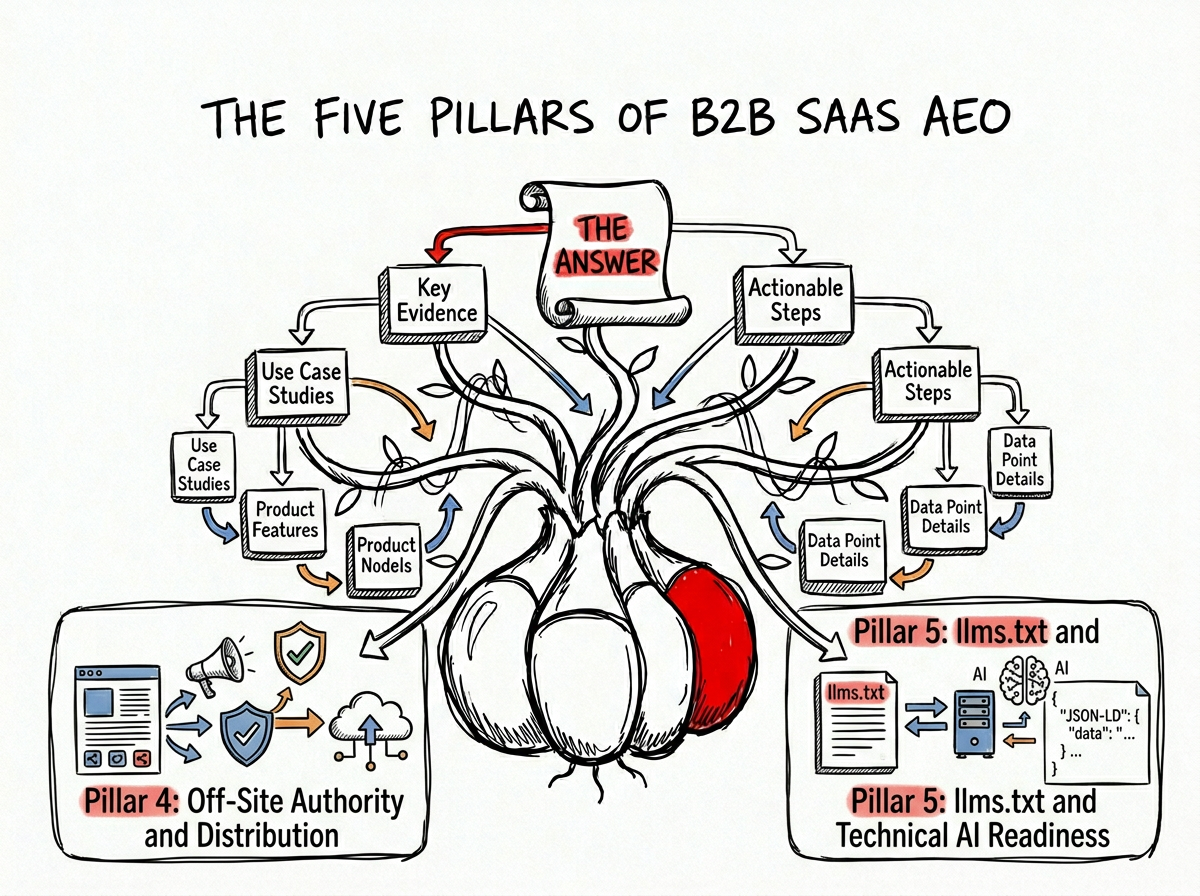
Pillar 5: llms.txt and Technical AI Readiness
The llms.txt file is emerging as the AI‑era counterpart to robots.txt: a single place where you communicate crawling and usage policies to AI systems.
Implementation steps:
- Place an llms.txt file at your domain root (e.g.,
https://yourdomain.com/llms.txt). - Describe your company, products, and key content sections in a structured way.
- Explicitly allow AI crawlers to access public content and disallow sensitive or gated areas.
- List known AI crawler user agents (GPTBot, Google‑Extended, ClaudeBot, PerplexityBot, etc.).
- Ensure your site is fast, stable, and easily crawlable—no unnecessary JavaScript gates on core content.
- Meet or exceed Core Web Vitals thresholds to keep models from timing out on heavy pages.
AI crawlers fetch many more pages than they send users back for. That makes crawlability and clarity table stakes for even getting a shot at being cited.
Real-World Applied Scenario
A mid‑market B2B SaaS company working with a specialized AEO agency increased AI‑referred trials from 575 to more than 3,500 in seven weeks. The team shipped over 60 optimized articles using a consistent AEO framework, fixed broken schema and internal links, and launched authentic Reddit engagement that drove several #1 subreddit threads. Within 72 hours of publishing, their content started showing up in AI answers. Within four weeks, four of their five most‑cited sources were new articles produced under the updated strategy. ChatGPT began recommending them as a top option for their target use cases, Perplexity cited their in‑depth comparison pieces, and Claude referenced their implementation guides—leading to a 600% uplift in AI citations and noticeable uplifts in organic rankings and branded search.
In another case, a SaaS workflow platform worked with a growth agency to re‑platform its content around AEO principles. They restructured 20+ blogs per month into Q&A‑driven formats, added answer capsules and comparison tables, and implemented comprehensive schema markup. Over a quarter, AI search sessions grew 7x, with long‑form blogs generating the highest session counts and outperforming both case studies and shorter comparison pieces.
Quotable sentence
“AEO does not generate traffic; it shapes the answers buyers see before they ever visit your website.”
FAQ
What is AEO, and how does it differ from traditional SEO?
Answer Engine Optimization focuses on making your content the source AI platforms cite when they answer questions, not just ranking you as a blue link. Traditional SEO optimizes for click‑through from search results pages, whereas AEO optimizes for extraction, citation, and brand mention inside AI‑generated responses. The two are complementary: strong SEO is still the foundation, but it is no longer sufficient on its own.
How long does it take to see results from AEO?
Perplexity and other real‑time engines can pick up new content within hours or days. Structural changes like adding answer capsules, statistics, and schema markup typically start showing impact within 30–45 days. Sustained gains in Share of Voice for your most important categories usually appear within one quarter of focused effort, and category‑leading visibility often takes two quarters of consistent execution.
Do I need to optimize separately for each AI platform?
Yes. The overlap between domains cited by ChatGPT and Perplexity is surprisingly small, and Google AI Overviews lean heavily on existing top‑10 search results. ChatGPT leans toward encyclopedic content and strong documentation, Perplexity favors up‑to‑date comparisons and community sources, and Google AI rewards multi‑modal content and classic SEO strength. A single generic strategy will underperform on at least one of these platforms.
What content formats get cited most by AI?
Deep “Best X for Y” guides, vendor comparison pages, pricing and feature breakdowns, and implementation or integration guides are repeatedly over‑represented in AI citations. Within those formats, content that uses statistics, expert quotes, and clearly labeled sections tends to be chosen more often. Long‑form pieces with well‑structured headings and tables outperform short, thin posts.
How do I measure AEO success?
Focus on five metrics: how often your brand is mentioned in AI answers for target queries (citation frequency), your share of those mentions versus competitors (Share of Voice), AI referral traffic volumes, conversion rates from AI‑sourced visitors, and how clearly your brand is identified and linked in responses. Over time, you should see rising citation frequency, growing AI‑origin trial volume, and higher close rates from these well‑educated buyers.